地球上最后一个人
受权发布|中国共产党第二十届中央纪律检查委员会第六次全体会议公报_我的网站

一 |
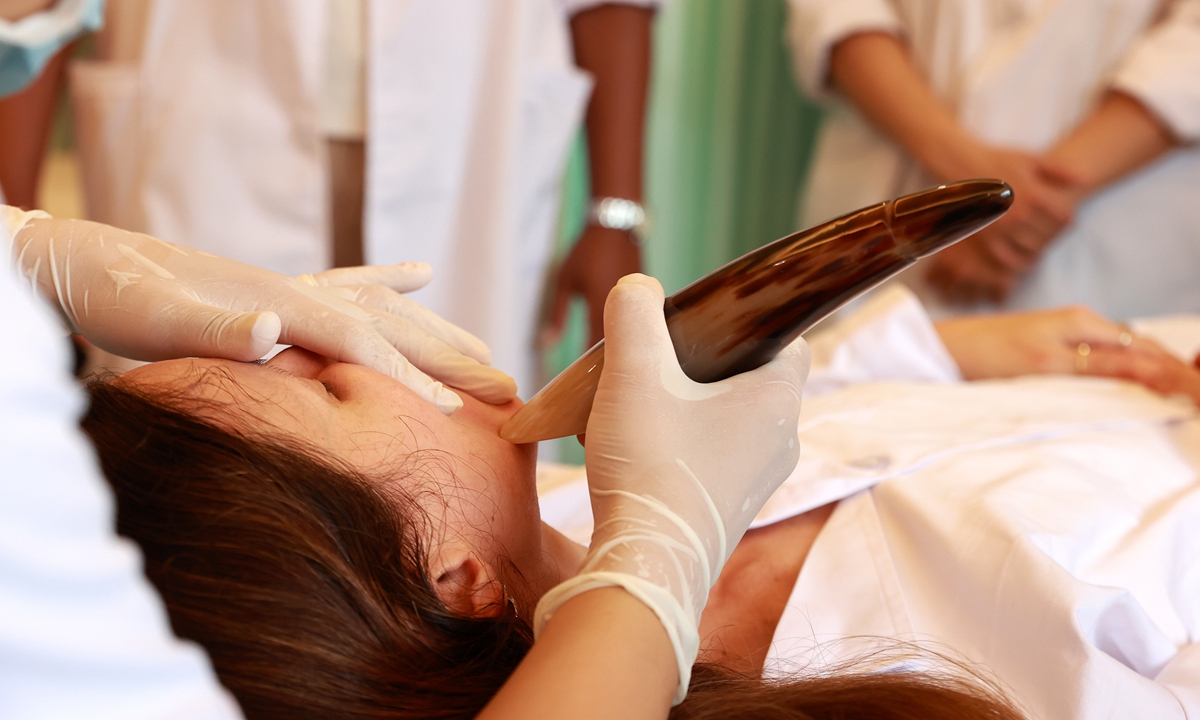
Trainees observe traditional Chinese medicine beauty techniques at the Sanya Hospital of Traditional Chinese Medicine in Sanya, South China's Hainan Province, on August 6, 2026.A skin scan can assess dozens of facial indicators and generate a personalized skincare plan within minutes, with store staff then making small-batch adjustments from ordinary registered cosmetics. This practice is gaining ground as China expands its pilot program for personalized cosmetic services.
Starting in August, eight provincial-level regions will join the second phase of the program, bringing the total number of participating provinces and regions to 23, according to the National Medical Products Administration.
Under the pilot program, cosmetic registrants and authorized domestic entities can provide personalized services by mixing or dispensing two or more cosmetics in small batches based on consumers' individual needs.
At the Beijing Tong Ren Tang personalized cosmetic service skincare experience center, for example, a skin analysis can assess more than 30 indicators and generate a personalized skincare plan, based on which consumers can order tailored products, according to the People's Daily.
Twenty-four-year-old Beijing resident Zhao Xiyao was among the early consumers to experience the service. She told the Global Times on Sunday that when buying skincare products in the past, she relied largely on the brand's advertising or online "ingredient reviews." Even when she knew what problems her skin tended to develop, it was still difficult to determine which products were truly right for her.
"Compared with simply buying a bottle of skincare product, I care more about the skin analysis that comes before the personalized service," she told the Global Times. "At least it first tells you what condition your skin is in, and then selects products based on that condition, rather than having everyone use the same set of products."
For Zhao, the appeal of the experience goes beyond the novelty of the word "personalized."
"If it's just about changing the packaging or putting my name on it, I don't think that means much. What really makes it valuable to me is whether it can actually make a difference based on my individual situation," she said.
The idea of tailoring skincare to individual needs, however, is not entirely new. It echoes the traditional Chinese medicine (TCM) principle of taking individual differences into account.
Yi Lan, a TCM physician practicing in South China's Guangdong Province, told the Global Times that people with the same skin concerns may need different approaches because of differences in their constitutions, lifestyles and living environments.
However, she noted that TCM diagnosis and modern personalized cosmetics are not the same: The former involves a comprehensive assessment of an individual's overall condition, while the latter mainly matches products to skin conditions and consumer needs.
For personalized skincare, the key lies in whether this matching process can deliver meaningful results.
"If personalized services are to become a lasting consumer service, the key will be 'precision,'" Yi said. "The test results must be reliable; otherwise, the plan that follows has little meaning."
According to Yi, if ordinary products are simply combined in a different way without being able to explain why that combination is suitable for a particular person, then "personalization" can easily become a marketing concept.
At its core, personalized skincare is less about making a product more complicated than about making the choice more relevant to the person using it. Technology is giving the traditional idea of taking individual differences into account a new expression in the consumer market. However, the real test is whether it can translate into products that are genuinely better suited to the individual.
。 新华社北京8月22日电
中国共产党第二十届中央纪律检查委员会第六次全体会议公报
(2026年8月22日中国共产党第二十届中央纪律检查委员会第六次全体会议通过)
中国共产党第二十届中央纪律检查委员会第六次全体会议,于2026年8月22日在北京举行。出席这次全会的有中央纪委委员116人。
全会由中央纪律检查委员会常务委员会主持。中共中央政治局常委、中央纪委书记李希讲话。

二 |
全会深入学习贯彻习近平新时代中国特色社会主义思想特别是习近平党建思想。会议指出,习近平党建思想是习近平新时代中国特色社会主义思想的党建篇,是新时代全面从严治党实践经验的系统总结和理论升华,博大精深、内涵丰富、思想深邃、体系严密,引领全党开辟了百年大党自我革命新境界,为管党治党、兴党强党提供了根本遵循和行动指南。纪检监察机关是推进全面从严治党的重要力量,必须深刻领悟“两个确立”的决定性意义、坚决做到“两个维护”,矢志不渝做习近平党建思想的坚定信仰者、忠实实践者,坚定走好中国特色反腐败之路,以更高标准、更实举措推进新时代新征程纪检监察工作高质量发展。
全会总结了2026年上半年纪检监察工作,对做好下阶段工作提出要求。会议强调,要进一步强化思想引领,深刻体悟习近平党建思想的真理力量、实践伟力,准确把握精髓要义、实践要求,自觉用以武装头脑、指导实践、统领纪检监察一切工作。

三 | 进一步强化工作落实,牢固树立和践行正确政绩观,加强政治监督,深化政治巡视,严明换届纪律,坚定不移正风肃纪反腐,持续深化群众身边不正之风和腐败问题集中整治,确保高质量完成全年任务。

四 | 进一步强化系统思维、底线思维,抓主抓重、统筹推进,更好形成工作合力,坚决守牢安全底线。

五 | 进一步强化队伍建设,按照政治过硬、能力过硬、作风过硬、廉洁过硬重要要求,持续抓好“纪检监察工作规范化法治化正规化建设年”行动,锻造忠诚干净担当、敢于善于斗争的纪检监察铁军。
全会按照党章规定,选举赵世勇同志为中共中央纪律检查委员会副书记,张忠同志为中共中央纪律检查委员会常务委员会委员、副书记。(完) 【编辑:张令旗】。
Current article:http://1w2out4.zongchaeiwengshuabaisisuofu.sbs/list_2da/7yr.html
Published on:01:38:08
